
Solid hardwood
Traditional solid wood can offer substantial refinishing potential where installation conditions and product requirements are appropriate.
Hardwood and engineered wood flooring bring warmth and long-term visual value when the material, subfloor, layout and transitions suit the property.
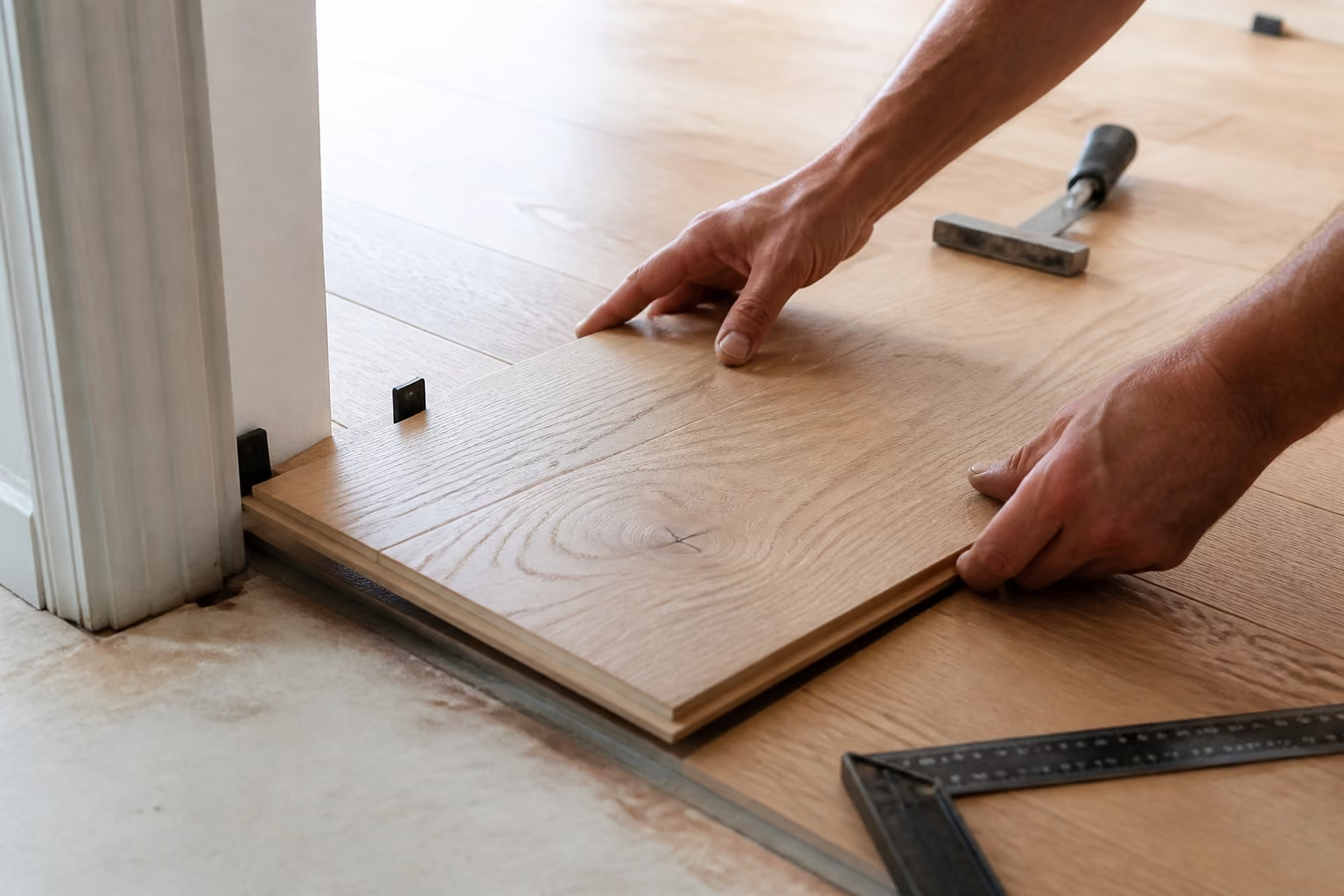
Both options use real wood, but they respond differently to environment, installation method and future refinishing goals. The right choice depends on the floor assembly, room conditions, selected product and intended use.
Traditional solid wood can offer substantial refinishing potential where installation conditions and product requirements are appropriate.
A layered core can provide greater dimensional stability while keeping a real wood surface.
Flatness, fastening condition, squeaks, damage and height transitions should be reviewed before installation.
Plank direction, starting lines, focal areas and visible cuts shape how the floor reads across connected rooms.
Transitions, nosings, thresholds and trim details need to be part of the plan, not late-stage fixes.
Finish type, traffic, pets, humidity and cleaning habits all affect how the floor will age.
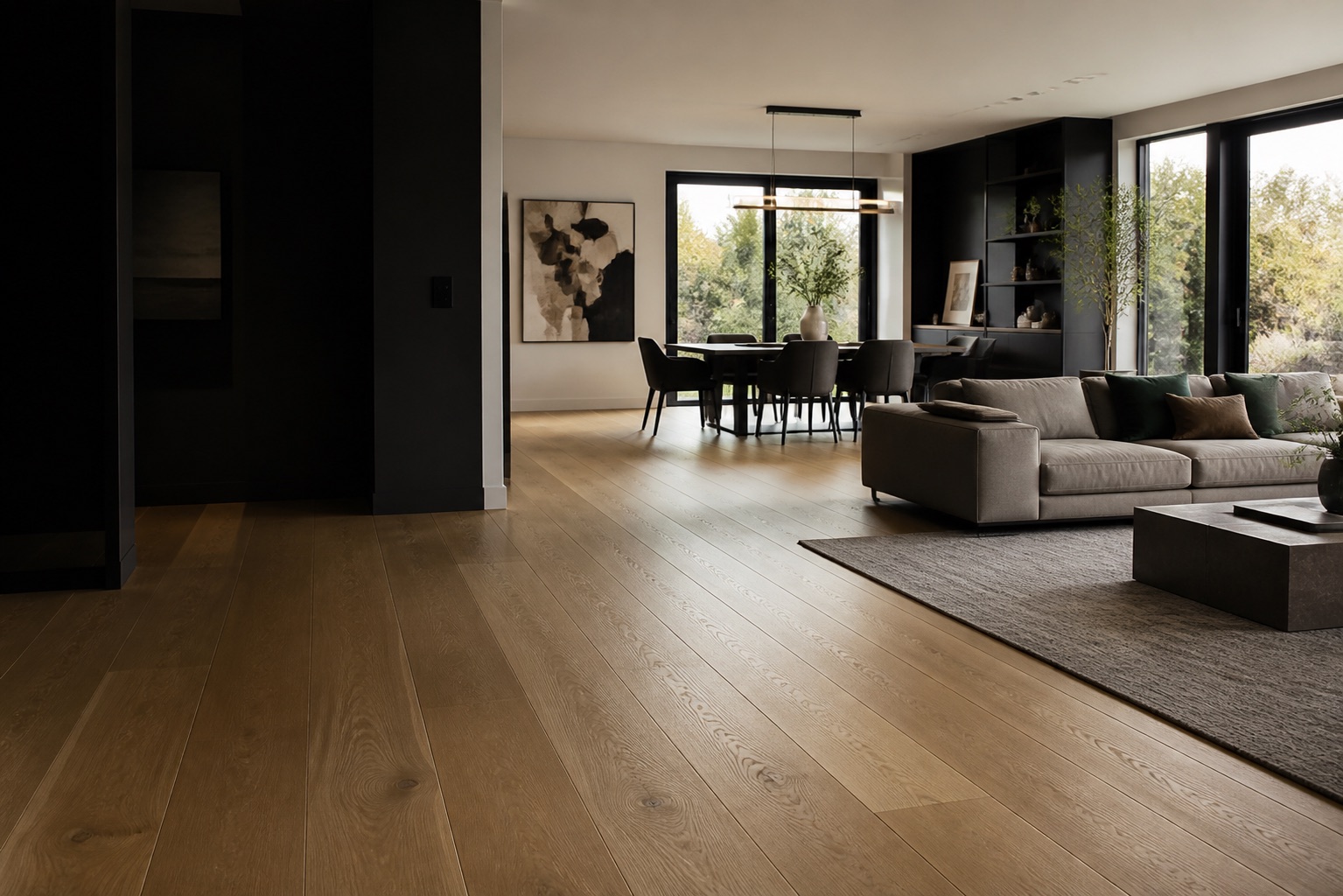
Board width, colour variation, sheen and direction can make a space feel calmer, wider or more continuous. Samples should be considered in the actual light where the floor will live.
Material choice is only one part of the result. Preparation, alignment, expansion, thresholds and the order of remaining renovation work all affect the finished space.
Choose the natural variation and character of hardwood around the home's design.
Align the product, subfloor, layout and transition method before work begins.
Coordinate the floor with stairs, trim, doors and adjoining materials.
Manufacturer instructions and property conditions matter. These answers are a starting point for a project-specific discussion.
Solid hardwood is one piece of wood; engineered hardwood uses a real wood layer over a layered core. Site conditions, construction and refinishing goals affect the choice.
Many products require site conditioning or acclimation. Follow the specific manufacturer's instructions and confirm environmental conditions before installation.
Product and manufacturer requirements vary. Engineered wood may be considered in some below-grade applications, but moisture conditions and the floor assembly must be assessed.
Structure, light, hallway lines, room proportions and transition locations can all influence the layout. The best direction is project-specific.
Send photos, approximate room sizes, the address or postal code and any product already selected.